Sun Damaged Skin
Cutaneous ageing signs of sun damaged skin become visible from as early as the twenties, especially with excessive sun or environmental exposure. However between the ages of 35 to 49 years there is a sharp increase in prevalence of skin changes clearly ascribable to photo-aging such as pigmented spots and sun damaged skin . Awareness of the damaging effect of UV radiation on the facial appearance and sun avoidance and protection before the age of twenty will help reduce the risks for developing sun damaged skin later in life.
Ageing skin and sun damaged skin unsettles women more than men; because society believes a woman loses her attractiveness once visible signs of facial ageing set in. Characteristics of facial sun damaged skin include fine and coarse wrinkle formation, pigmentation changes, sallow colour, dry texture, loss of elasticity, loss of skin tone, sagging subcutaneous tissues, underlying muscle hypertrophy and volume loss in the face.
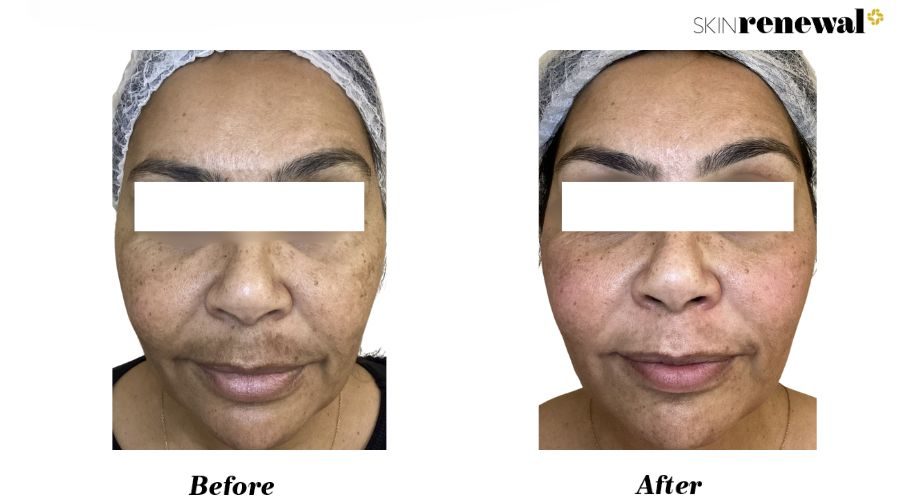
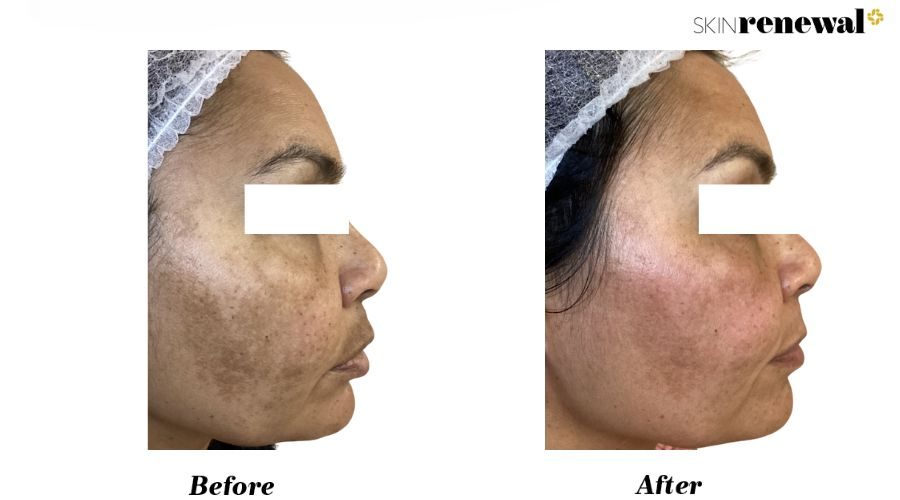
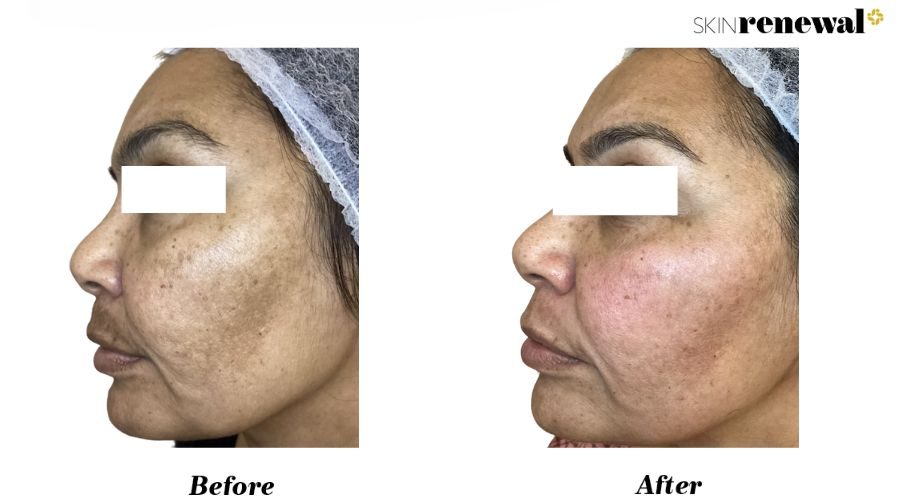
Sun damaged skin is associated with a range of cosmetic concerns - from pigmentation problems and splotchy skin to redness due to enlarged vessels or capillaries, all causing discolouration of the skin. Photo ageing caused by ultraviolet light exposure, tends to act more on the surface of the skin. There are sun freckles or irregular pigmentation and dilated blood vessels (often referred to as "broken" blood vessels) that lead to an overall uneven tone and discolouration.
How does sun exposure age our skin?
Without protection from the sun's rays, just a few minutes of exposure each day over the years can cause noticeable changes to the skin. Freckles, age spots, spider veins on the face, rough and leathery skin, fine wrinkles that disappear when stretched, loose skin, a blotchy complexion, actinic keratoses (thick wart-like, rough, reddish patches of skin), and skin cancer can all be traced to sun exposure.
The skin ages when the epidermis (outer layer of the skin) begins to thin, causing the junction with the dermis (outer layer) to flatten. Sun Damaged Skin has a thicker epidermis (keratin), which is "dead" and irregular. There is increased water loss from the skin and a decrease of the sebaceous glands, which provides natural moisture to the skin. More abnormal cells accumulate in aged skin, especially if there is chronic sun damage, which can lead to pre-cancerous and cancerous lesions.
Scientific studies have shown that repeated ultraviolet (UV) exposure breaks down collagen and impairs the synthesis of new collagen. The sun also attacks our elastin. Sun Damaged Skin also causes chronic inflammation of the skin and an increase of elastin that clusters into thick bundles called solar elastosis. Collagen decreases as we age and the bundles of collagen, which gives the skin turgor, become looser and loses strength.
People with fair skin who have a history of sun exposure develop more signs of sun damage than those with dark skin .In people of colour, the signs of sun damage are usually limited to fine wrinkles, a mottled complexion and sagging of the midface leading to under eye bags.
The degree of sun damage as classified by Glogau:
>- Mild (age 28-35 years): Few wrinkles, no actinic keratoses ( tender red dry spots) , requires little or no make-up
- Moderate (age 35-50 years): Early wrinkling, sallow complexion with early actinic keratoses( tender red dry spots), requires little makeup
- Advanced (age 50-60 years): Persistent wrinkling, discoloration of the skin with telangiectases and actinic keratoses( tender red dry spots), always wears makeup
- Severe (age 65-70 years): Severe wrinkling, photo ageing, gravitational and dynamic forces affecting skin, actinic keratoses ( tender red dry spots) with or without skin cancer, wears makeup with poor coverage
Home therapies:
At Skin Renewal we offer traditional topical home therapies such as AHA s, PHA s, and Renewal cream as well as recent advances in pigmentation technology such as the Dermaheal growth factor range as well as the recently launched Luminesce brightening range by Lamelle.
Luminesce, an advanced pigmentation program which addresses hyper-pigmentation by reducing melanin at several points in its production, as opposed to just one point as with other treatments. This wider inhibitory effect is an industry first, positioning the Luminesce range as one of the most innovative. Lamelle uses groundbreaking peptide technology (Oligopeptide 34) for treating pigmentation and has recently added 3 new peptides to the program which offers excellent results in combating epidermal and post inflammatory hyper- pigmentation ( PIH). An added benefit is that the combination of peptides used in the range offers anti-ageing benefits to the skin as they stimulate collagen producing cells. Traditionally skin discolouration has been one of the most challenging conditions to treat, but there is definitely hope thanks to Luminesce. Luminesce used twice daily for 8 weeks will reduce the appearance of pigmentation and is safe for use on all skin types unlike traditional skin lightening cosmeceutical products as well as prescription medications These traditional products try combating hyper-pigmentation with disappointing results or worse - cause hypersensitive skin, which in turn aggravates the pigmentation.
Once the signs of ageing and sun damage appear on the facial skin, it is time to initiate the most powerful corrective treatments and topical therapies available such as growth factors to improve collagen content. Lamelle set out to produce the most powerful corrective product on the market. The Ultra moisturising renewal cream is that product. Crafted with the concentrations of Nobel Prize winning molecules, Dermaheal offers the ultimate in anti-ageing and laser-free skin remodeling.
Features and Benefits:
- Loaded with a triple cocktail of growth factors; Epidermal growth factor (EGF) renews the epidermal cells;
- Fibroblast growth factor (bFGF) renews the dermis and epidermis;
- Insulin Growth Factor (IGF-1) acts synergistically with the EGF and bFGF;
- Perfect combination of additional anti-aging peptides such as Acetyl Hexapeptide (Argireline) which acts as a 'Botulinum type' topical peptide;
- Copper tri-peptides keep the skin optimally protected and stimulated.
- No redness or sensitivity is experienced with Dermaheal as with traditional collagen stimulating products such as Retin A
- Dermaheal is suitable for all skin types
In Office therapies:
At Skin Renewal with the introduction photo rejuvenation treatments and exfoliation treatments such as Pearl™ laser, Limelight ™ , Mela T and M peels by Lamelle, TCA and Chemibrasion virtually any patient can be a candidate for improving sun damage skin depending on the area and the skin type . As each patient's case is different; we will tailor a treatment program specifically for you and your circumstances. A highly professional team led by a medical doctor assesses every patient and an appropriate combination treatment together with long term maintenance program is recommended. The new concept today is to start with photo rejuvenation devices early so as to prevent the deterioration of skin colour and texture as one gets older.
If we can treat sun damaged skin at an earlier age and stimulate the growth of new collagen, we might actually slow down the aging process significantly, allowing us to have healthier, better looking skin later in our golden years. Perhaps even more promising is the idea that treating skin with ablative lasers earlier on in the aging process-at around age 30-40-may actually slow or prevent the skin from breaking down and appearing wrinkled and saggy later on in life. In addition it has been clinically proven that after ablative laser treatments, there is a significant decrease in the level of p53 expression in biopsies obtained 3 months after treatment compared with baseline. By decreasing p53 expression with ablative lasers, there may be prevention of actinic neoplasia or skin cancers which are caused by excessive sun exposure.
Skin Renewal Tip:
Badly sun damaged facial skin with deep, ingrained wrinkles is a challenging condition to treat. Any non ablative treatment modality on its own cannot make a big difference. Ingrained facial wrinkles have different forms and grades and success at combating it needs a combination of treatments that include dermal filler rejuvenation, laser rejuvenation with Laser Genesis or Pearl resurfacing, Carboxytherapy and injection mesotherapy. After treatment with injectable filler Laser Genesis is the treatment of choice to treat more advanced facial wrinkling issues. This procedure is done one day after a filler procedure and is repeated very 2 to 3 days for a total of 5 to 6 treatments for optimal results.
Laser Genesis post filler has a two fold benefit:
- the bruising post filler rapidly resolves
- The bruising present in the skin "post filler" attracts the heat from the laser and has a superior effect on treating the ingrained wrinkles.


Ageing Skin