Melasma is often described as one of the most challenging pigmentation conditions to treat because it is influenced by a web of interconnected factors that go far beyond the skin's surface. Unlike superficial pigmentation that responds predictably to peels or lasers, melasma is driven by deeper processes. These underlying triggers mean that pigment is not only produced more readily but also deposited deeper in the skin, making it resistant to standard treatments.
Add to this the constant exposure to sunlight and heat, and it becomes clear why melasma is prone to relapse and requires a carefully layered approach. This complexity explains why long-term control requires more than just topical care; it calls for doctor-led, combination strategies that address both the internal and external roots of the condition.
The Role of the Dermal-Epidermal Junction in Melasma
When the basement membrane becomes damaged, melanocytes and pigment particles can penetrate deeper into the dermis, forming pendulous melanocytes. This dermal pigmentation is far more challenging to treat than superficial epidermal pigmentation.
Why Repairing the Basement Membrane Is Essential
- Prevents Deeper Pigment Migration: A healthy DEJ stops melanocytes and melanin (pigment) from descending into the dermis.
- Reduces Hyperpigmentation: Key proteins such as collagen IV and laminin—5, degraded by the matrix metalloproteinases (MMPs) MMP-2 and MMP-9 (often triggered by UV exposure), are vital for maintaining DEJ integrity.
- Improves Treatment Success: Restoring the basement membrane enables standard melasma treatments to be more effective.
- Minimises Recurrence: Strengthening the DEJ offers long-term pigment control and reduces relapse rates.
Understanding the Vascular Component of Melasma
Emerging research reveals that increased vascularity plays a key role in the development and persistence of melasma, not just excess melanin. Melasma-affected skin often shows more and larger blood vessels, which contribute to pigmentation in several ways. The overproduction of vascular endothelial growth factor (VEGF) promotes new blood vessel formation and dilation, enhancing the delivery of pigment-stimulating signals to melanocytes. These blood vessels release inflammatory substances, such as histamine, which further trigger melanin production.
Additionally, leaky capillaries cause local inflammation, which worsens pigmentation, making vascular involvement a crucial factor in understanding and treating melasma effectively.
How Sun Exposure Worsens Vascular Changes in Melasma
Sun exposure is one of the primary triggers of melasma, and it does more than darken the skin. UV rays can increase blood vessel activity in the skin, worsening pigmentation. This happens in a few ways:
- VEGF Production: UV rays increase a protein called VEGF, which causes new blood vessels to form.
- Increased Nitric Oxide: UVB light boosts nitric oxide levels, leading to widened blood vessels and more melanin (pigment) production.
- Skin Barrier Damage: Ongoing UV exposure damages the skin's structure, which can lead to more blood vessel growth and pigmentation.
This is why daily sun protection is essential when treating melasma, especially when increased vascularity is part of the problem. Read more about why the South African sun is more dangerous.
How Hormones Affect Melasma and Blood Vessel Activity
Hormones play a significant role in melasma, especially regarding changes in blood vessels and increased pigmentation.
- Oestrogen increases blood vessel growth and makes pigment-producing cells (melanocytes) more active.
- Progesterone and luteinising hormone (LH) can also influence the skin's sensitivity to pigmentation, but to a lesser degree.
- Thyroid hormones, especially in thyroid disorders, have been linked to melasma and can affect pigmentation and blood flow in the skin.
These hormone-related changes help explain why melasma is often seen during pregnancy or with hormonal contraceptive use.
Gut Health and Melasma
Emerging research links chronic pigmentation, such as melasma, to gut imbalances, leaky gut syndrome, and inflammation. Poor gut health can increase systemic inflammation, contributing to hormonal imbalances and oxidative stress, which can worsen hyperpigmentation.
Probiotics, prebiotics, anti-inflammatory foods, and eliminating gut disruptors like gluten, dairy, and sugar may help reduce flare-ups and improve skin clarity over time. Working with a functional medicine practitioner to heal the gut can offer long-lasting improvements in skin health.
Can Reset Renewal Make a Difference?
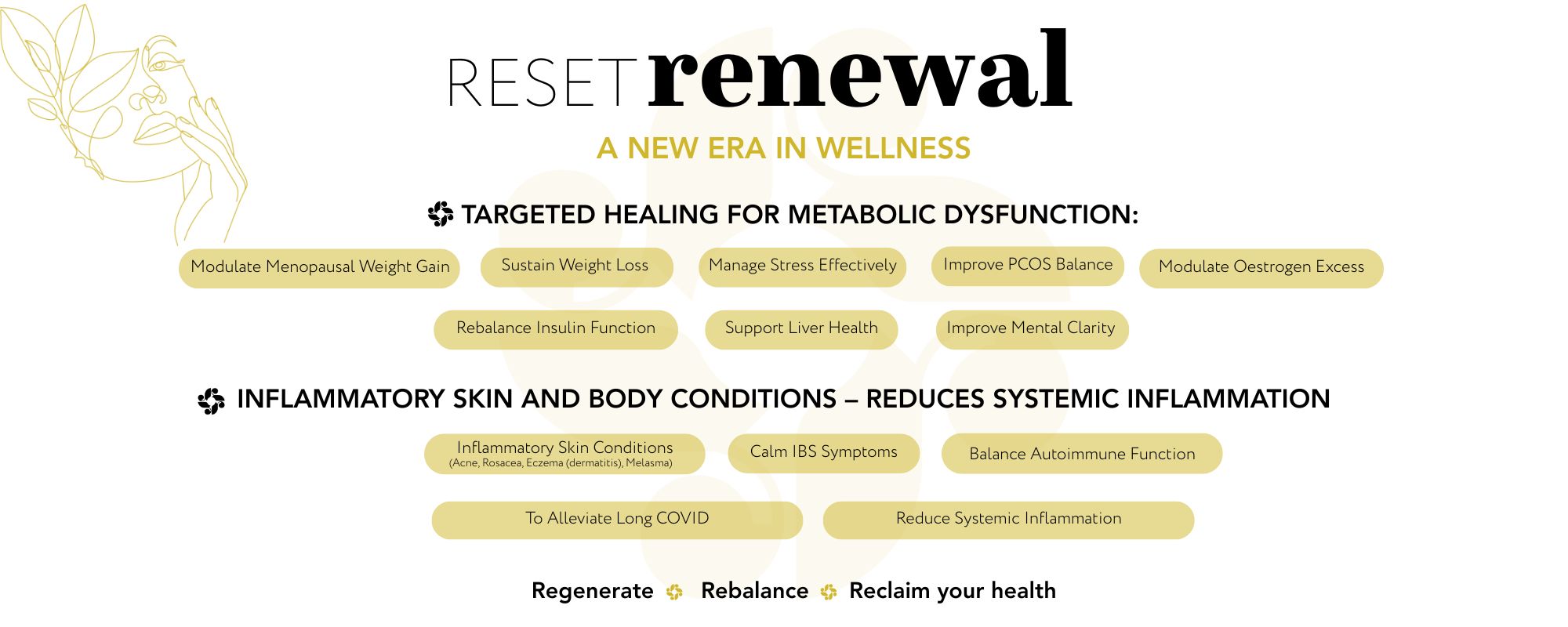
At Skin Renewal, we understand that melasma is influenced by far more than surface pigmentation—it is a reflection of deeper imbalances involving hormones, vascular health, and even the gut. This is where our Reset Renewal Programme becomes invaluable. By addressing the root causes of inflammation, hormonal shifts, and digestive disturbances, Reset Renewal works to restore internal balance and strengthen the body's natural resilience.
Through doctor-led guidance, targeted supplementation, and lifestyle adjustments, this programme helps reduce the internal triggers that drive melasma, making aesthetic treatments more effective and results more sustainable. In essence, Reset Renewal provides the foundation for more transparent, healthier, and more radiant skin from the inside out.